

Written by Francesca Steyn, NMC-registered fertility practitioner
Sperm takes roughly 64 to 74 days to make. Sperm spend around 50 to 60 days developing in the testicles, then mature for a further two weeks in the epididymis before they are ready to be released. Here is what happens at each stage of spermatogenesis, and what it means for your fertility.
Spermatogenesis, the process your body uses to produce sperm, starts at puberty and carries on throughout a man's life. Although production is continuous, it isn't fixed in quality. As men get older, both the number of sperm and how well they move can decline. This varies from person to person, but a drop in motility (how well sperm "swim") is particularly common in men over 40.
The stages of spermatogenesis (sperm life cycle)
Everything begins with specialised stem cells in the testes. These cells have the remarkable ability to become many different types of cell, and in this case, they develop into mature spermatozoa, the scientific name for sperm. The process is triggered by signals from the brain, which uses hormones to tell the testes when to get things moving.
How long does sperm production actually take?
From the start of development to the point where a sperm cell is fully mature, the whole cycle takes roughly 64 to 74 days. The exact timing differs slightly between individuals, but the body is impressively efficient. Healthy men produce millions of new sperm every day.
The maturation and journey of sperm
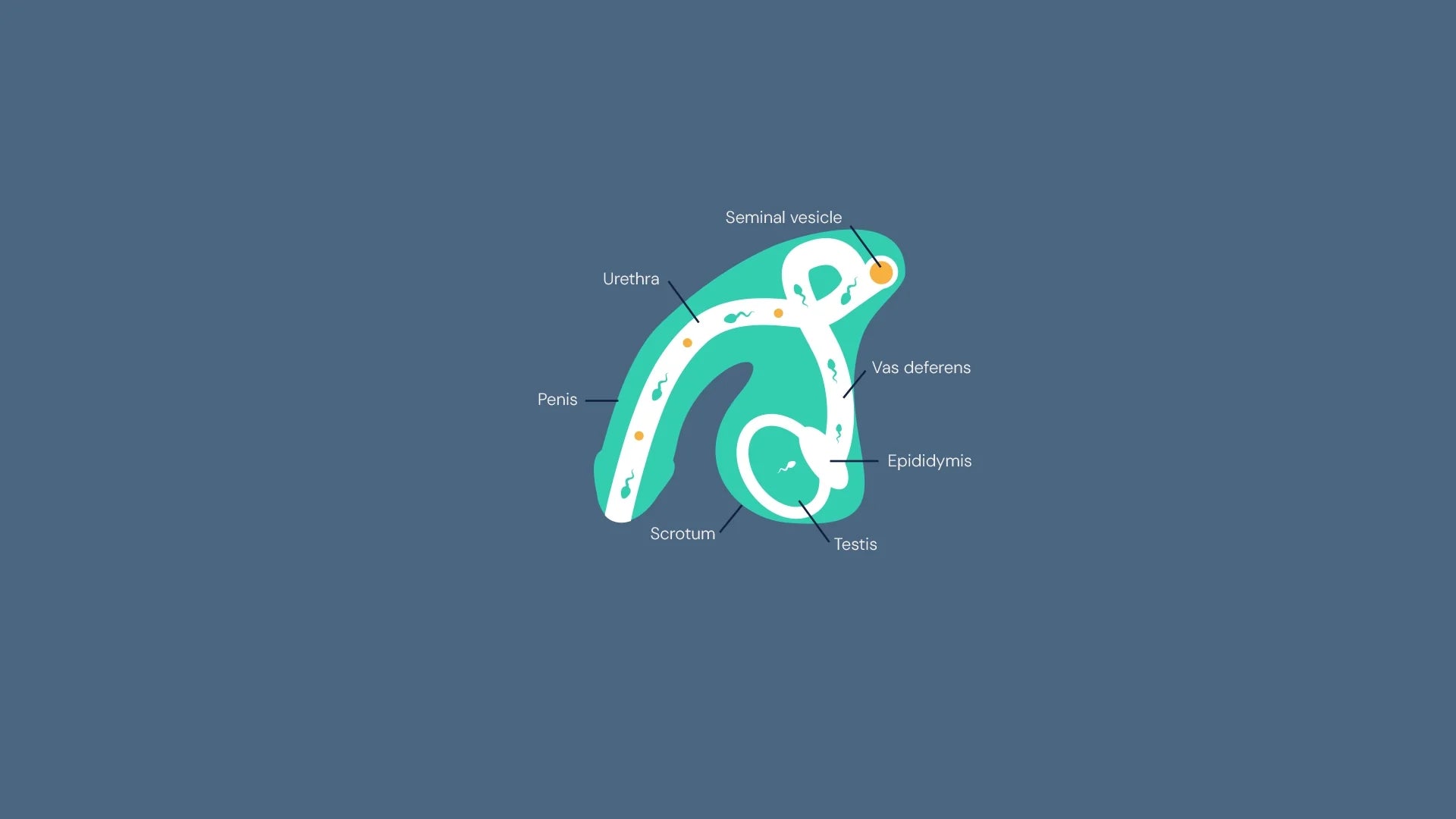
Sperm start out in the testicles, where they spend around 50 to 60 days developing. After this, they move into the epididymis, the small coiled tube behind the testicles, where they mature for another couple of weeks. Once they're fully developed, they're ready to travel. When needed, they make their way through the vas deferens, a narrow tube connecting the epididymis to the urethra, and are eventually released during ejaculation.

Semen: more than just sperm
Before leaving the body, sperm mix with fluid from the seminal vesicles. This fluid gives sperm a better chance of surviving the journey to the egg. Combined, the sperm and fluid form semen, which exits through the urethra. To give you a sense of scale, a fertile man's semen usually contains anywhere from 20 to 300 million sperm per millilitre.
Fertility factors: creating the best conditions
Sperm are living cells, which means they're affected by the same things that influence overall health. Throughout their 74-day development, factors such as high temperatures, smoking, drug use, and poor diet can all have a negative impact. If conception is the goal, it's worth remembering that healthier habits over those few months can make a meaningful difference to sperm quality.
Frequently asked questions
How long does sperm production take?
From the start of development to full maturity, the whole cycle takes roughly 64 to 74 days. Sperm spend around 50–60 days developing in the testicles, then a couple of weeks maturing in the epididymis.
What is spermatogenesis?
Spermatogenesis is the process by which the body produces sperm. It begins at puberty and continues throughout a man's life. Specialised stem cells in the testes develop into mature spermatozoa, triggered by hormonal signals from the brain.
How many sperm does the body produce each day?
Healthy men produce millions of new sperm every single day. A fertile man's semen typically contains between 20 and 300 million sperm per millilitre.
Does sperm quality decline with age?
Yes. As men get older, both sperm count and motility (how well sperm swim) can decline. A drop in motility is particularly common in men over 40, though this varies between individuals.
What factors affect sperm quality?
High temperatures, smoking, drug use, and poor diet can all negatively impact sperm quality during the 74-day development window. Improving these habits in the months before trying to conceive can make a real difference.
What is the epididymis and what role does it play?
The epididymis is a small, coiled tube behind the testicles. After developing in the testes, sperm move to the epididymis where they mature for a couple of weeks before they're ready to be released during ejaculation.
What is semen made of?
Semen is a combination of sperm and fluid from the seminal vesicles. The fluid helps sperm survive the journey to the egg. A fertile man's semen contains roughly 20 to 300 million sperm per millilitre.
Can I test my sperm quality at home?
Yes. The Malebox Home Sperm Test lets you check your sperm count and motility from home, with next day results delivered by a 1-1 consultation with a fertility expert.
Francesca Steyn is an NMC-registered fertility practitioner with over 20 years in reproductive health. She has served on the NICE guideline committee and the HFEA legislative reform group.


